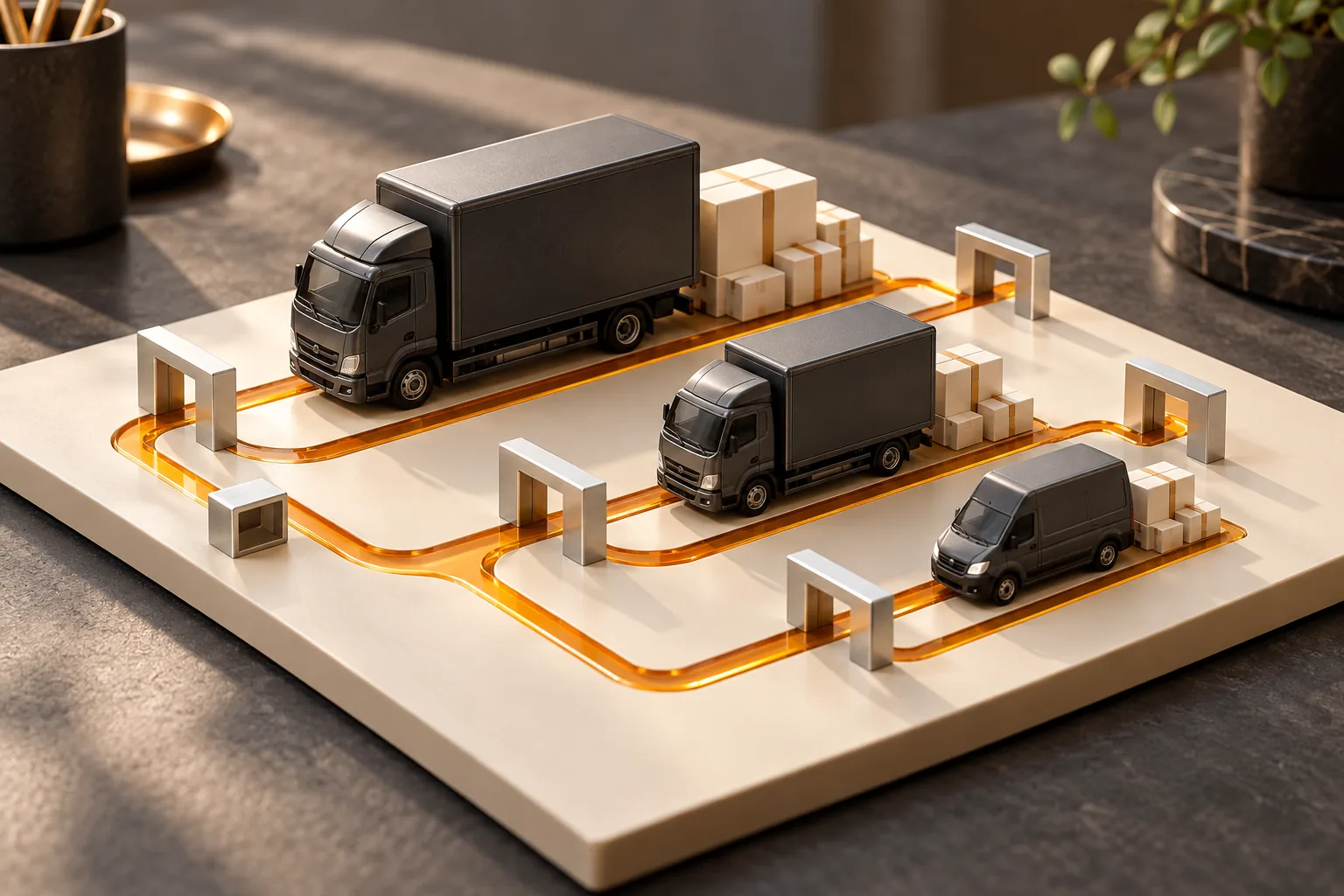
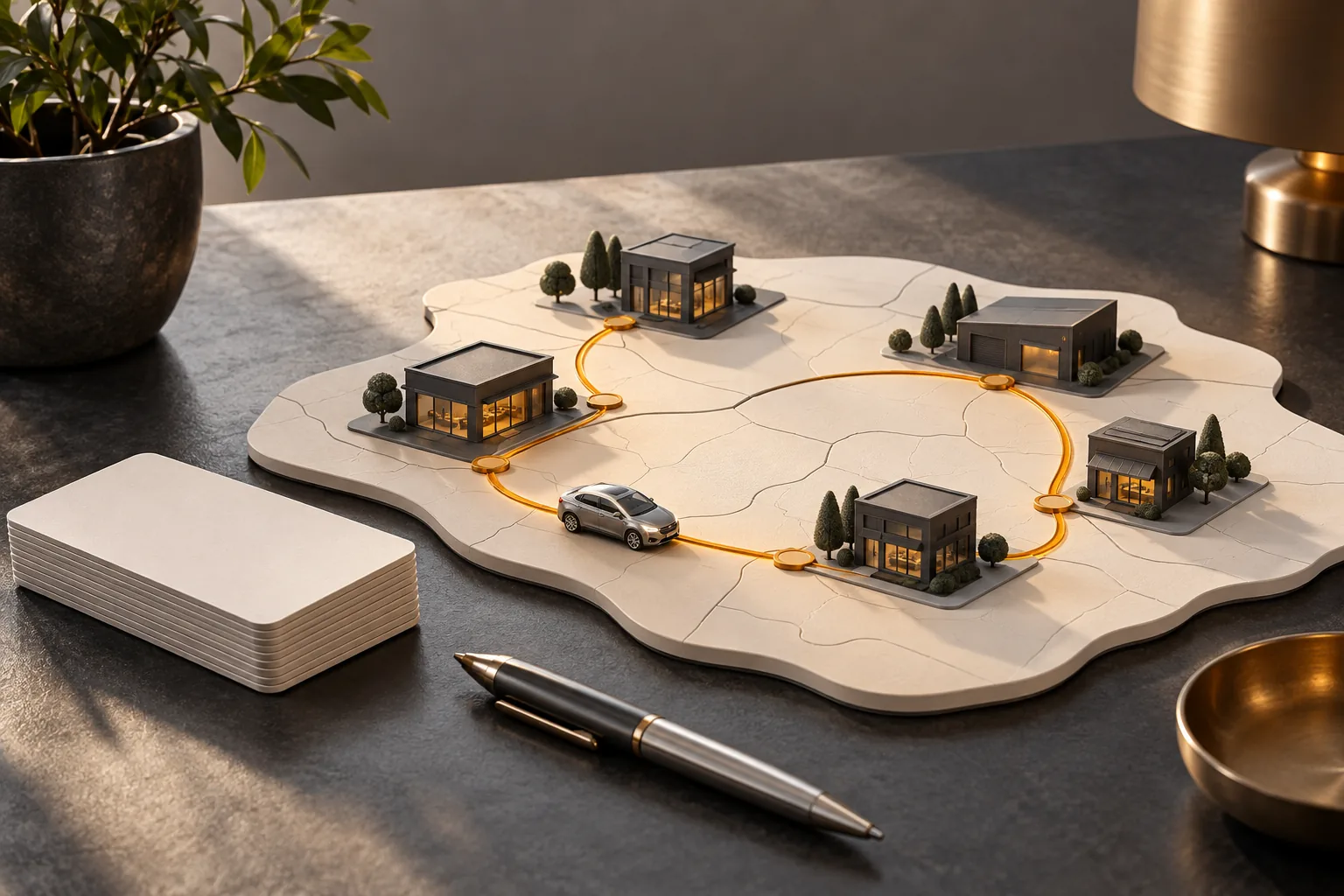
A delivery day starts with the constraints of the people who carry it out.
A delivery can be close to the warehouse and still be difficult to schedule. The customer accepts goods only during certain hours, the right vehicle is already loaded or a pickup needs to happen on the same route. Distance becomes meaningful alongside those constraints.
At Progymédia, we approach planning as a connection between orders, available resources and the driver's work. The possibilities we present include multiple vehicles, deliveries, pickups, transfers and field follow-up. Functions, exchanges and parameters still need to be defined for each project.
Start with what makes a delivery possible.
We first identify what a delivery requires: its starting point, destination, the customer's availability and the vehicle's specific needs. A receiving window needs context. Is it mandatory? What flexibility can be discussed? Who confirms a change?
Capacity deserves the same attention. Depending on the products, the issue may be space, weight or a handling requirement. We define the information needed and its source before deciding how planning will use it. A consistent calculation depends on information that reflects the work.
Connect deliveries, pickups and transfers.
Stops can have different purposes. Delivering to a customer, collecting goods and moving products between locations do not use a vehicle in the same way. The team needs to define what must be available at departure and what will come back later.
We follow an example of each mission type to understand the documents, responsibilities and confirmation requirements. Links to orders and receipts need to retain their meaning. A planned mission and a completed mission represent different stages in the systems.
Balance the days around your parameters.
With several vehicles, distribution of the work becomes another question. A day that looks short on a map may include demanding stops. We examine capacity, availability windows, starting and ending points, and the constraints of each mission.
Many combinations are possible. A proposed route needs to be evaluated against the selected parameters and available information. The team should understand why a stop was assigned, identify problems and adjust the proposal. That clarity helps keep planning useful as priorities change.
From a mission to field follow-up
01MissionsDeliveries, pickups and transfers with their constraints.
02AssignmentAgreed vehicles, capacity and availability.
03Driver workflowUseful information and expected confirmations.
04Follow-upCompleted work, issues or a rescheduled mission.
Design outline. Data, exchanges and validation depend on the project; the parameters do not guarantee an absolute best route.
Prepare what the driver needs to do as well.
Planning continues in the driver's workflow. Which instructions are useful at a stop? What needs confirmation? When does a signature or photograph help document the situation? We define those steps with the people making deliveries and those answering customers afterwards.
Signatures, photographs and issue reports are among the possibilities we present. Their use and access need organization. An attachment should connect to the right mission and be retrievable by the appropriate person. The expected confirmation should be clear before departure.
Give problems and rescheduled deliveries a clear next step.
A customer may be absent, receiving may be impossible or goods may need checking. The driver needs a way to describe the problem, and the team needs to know who makes the decision. Follow-up benefits from distinguishing the observation, the decision to reschedule and the new mission to organize.
We also examine how that information reaches other tools. Which status is sent? Who informs the customer? Where can someone find the evidence explaining the change? These answers help keep an exception from getting lost between field work, customer service and the authoritative system.
Validate a representative day before expanding.
A useful starting point is a familiar day: its missions, the vehicles used, receiving hours and the exceptions encountered. Your team can check whether the proposal is realistic and identify missing information. Unusual cases help make the rules more precise.
Cost analysis can enrich the discussion, but it needs evidence. A cost report that has seen limited testing cannot establish the marginal cost of an additional stop or automatically settle a choice between an internal route and an outside carrier. We treat those estimates as questions to investigate with comparable data.
What to bring to a first planning exercise
✓ A day of missions, including relevant deliveries, pickups and transfers.
✓ Vehicle capacities and availability.
✓ Receiving windows and genuinely mandatory constraints.
✓ The information and confirmations expected from the driver.
✓ An issue or rescheduled delivery whose follow-up needs improvement.